Brainwave frequency bands chart
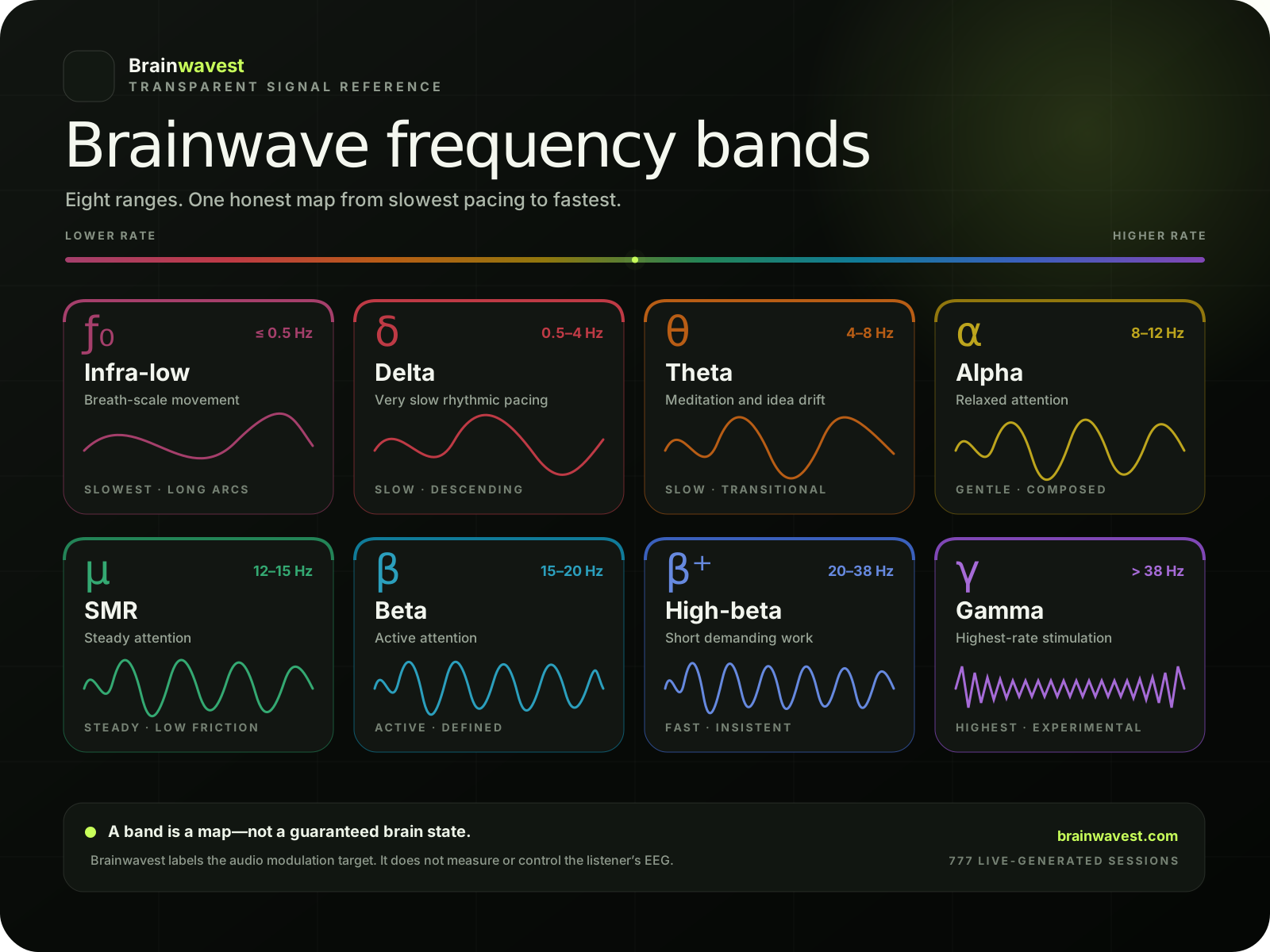
Eight frequency ranges, one interactive chart, and the distinction that keeps the labels honest.
A brainwave frequency band is a named range of rhythmic activity measured in cycles per second, or hertz. Delta is slower than theta; theta is slower than alpha; alpha is slower than beta; gamma is fastest. The names are useful shorthand, but their boundaries vary across researchers and they do not reduce the brain to eight settings.
Brainwavest uses the same labels to organize audio modulation targets. That is a description of the sound being generated—not an EEG reading, a diagnosis, or proof that the listener's brain has entered the band on the label.
The chart at a glance
- Infra-low — at or below 0.5 Hz: movement slower than one cycle every two seconds. In this catalog it supports long, gradual pacing and breath-scale trajectories.
- Delta — 0.5 to 4 Hz: very slow pacing used in quiet, descending sessions. Read the full delta guide.
- Theta — 4 to 8 Hz: slow pacing used in meditation, drowsy transitions and open-ended creative designs. Read the theta guide.
- Alpha — 8 to 12 Hz: gentler mid-range pacing used for relaxed attention and wind-down. Read the alpha guide.
- SMR — 12 to 15 Hz: a narrow sensorimotor-rhythm range used for composed, low-friction work. It shares a guide with beta.
- Beta — 15 to 20 Hz: faster pacing used for active, defined work blocks. Higher is not automatically better.
- High-beta — 20 to 38 Hz: insistent, high-rate pacing reserved for shorter demanding sessions in the Brainwavest catalog.
- Gamma — above 38 Hz: the highest-rate range in this catalog. The 40 Hz research story is interesting and frequently oversold; read the gamma guide before treating a stimulus rate as an outcome.
EEG band and audio rate are not the same thing
An EEG records voltage changes at the scalp and researchers describe recurring frequency components with labels such as alpha or beta. An audio session can repeat or modulate sound at a rate that falls inside one of those numerical ranges.
Those two facts do not mean the audio has measured, copied, or controlled the listener's brain activity. Rhythmic sound can produce measurable auditory responses, but the size, location and practical meaning of that response vary. Brainwavest therefore publishes the stimulus specification and keeps the outcome language modest.
The useful question is not “Which band is best?” It is “Which pacing character, session length and listening setup fit what I am doing right now?”
How to use the interactive atlas
- Choose a band to see its range, relative pacing character and normalized signal portrait.
- Treat the waveform as a visual comparison of timing density—not a brain scan or a prediction of your response.
- Open the matching Library filter and inspect the exact starting rate, target rate, ramp, carrier and delivery mode before playing.
- Start quietly. Judge the session by fit and comfort, not by whether the label sounds impressive.
Band is not delivery mode
Delta, theta, alpha, SMR, beta and gamma describe rates. Binaural, isochronic, monaural, phase-amplitude coupled and poly-rhythmic describe ways of constructing or delivering rhythmic sound.
A theta-rate design might be binaural and require stereo headphones, or it might use an isochronic pulse that exists in the sound itself and can work through speakers. Use the headphones-or-speakers guide or compare binaural, isochronic and monaural methods before choosing hardware.
What the chart cannot tell you
It cannot tell you that a frequency will make you sleep, focus, remember, heal, meditate or enter a named mental state. Associations observed in EEG research are not interchangeable with guaranteed effects from open-loop consumer audio.
It also cannot tell you that a faster band is stronger or a slower band is safer. Loudness, carrier, modulation depth, envelope, duration, personal sensitivity and context all matter. Stop if a sound feels uncomfortable, and never use rhythmic audio while driving or operating machinery.
The shortest path from chart to sound
If you know the band, use its Library filter from the atlas. If you only know the moment—focus, wind-down, sleep, calm or creative work—Brainwavest Today is the better starting point. Four practical choices produce one explainable recommendation without diagnosing you or building a personal profile.
See the frequencies inside the sound.
Every session publishes its target rate. These bands guide the sound design; they are not a promise to control your brainwaves. Read what the evidence actually supports.
α Alpha Band (8 – 12 Hz)
Alpha activity is commonly associated with relaxed wakefulness. Brainwavest uses this range for low-friction focus and wind-down sessions, without promising a forced brain state.
Normalized visual comparison · not an EEG reading
Try a session shaped for this guide
Listen quietly and judge it by whether it fits your routine—not by a promised outcome. Your first three complete sessions are free, with no card required.
Delta Sleep GatewayDelta · 2.5 Hz · 27 min · IsochronicTry this sessionMore sessions from this guide
Every session publishes its full signal specification before you press play. Try the guide’s featured session, browse all sessions, or read the science page for the mechanisms drawn in full.