Alpha waves (8–12 Hz)
The first brain rhythm ever recorded, and still the most reliable one to elicit.
Alpha, roughly 8 to 12 Hz, is the rhythm Hans Berger recorded in 1924 when he made the first human EEG. It is still the easiest to demonstrate: sit quietly, close your eyes, and alpha over the back of the head rises sharply. Open them and it drops.
That single fact tells you most of what alpha means.
What it actually indexes
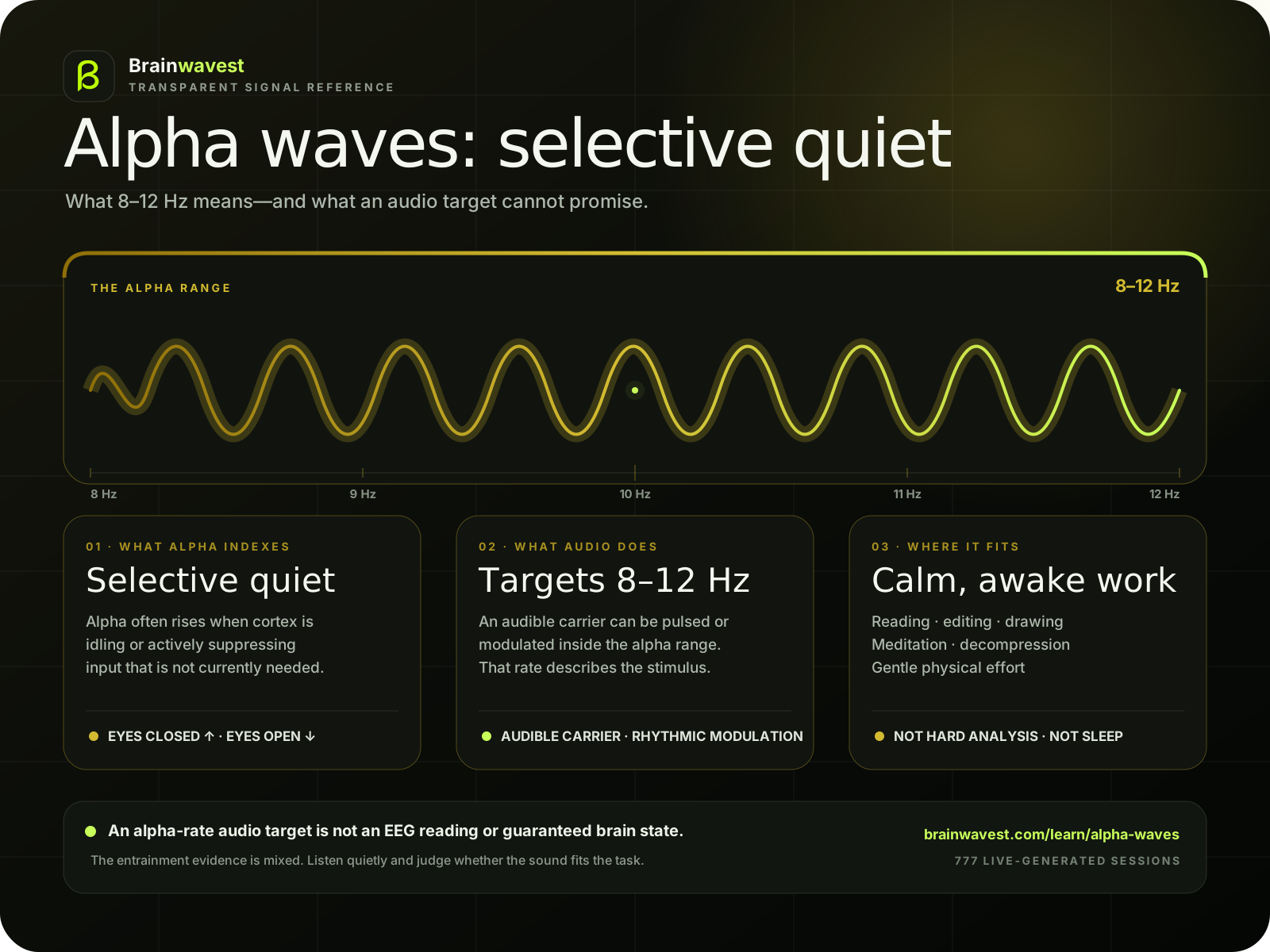
The popular framing is that alpha is "the relaxed state". A more accurate framing is that alpha reflects cortex that is idling or actively being suppressed.
The eyes-closed effect is the clean example: with no visual input to process, visual cortex idles, and alpha rises. Modern work extends this into an active role — alpha appears to be involved in inhibiting regions that are not currently needed, gating attention by turning down the areas that would otherwise interfere.
So alpha is not simply relaxation. It is closer to selective quiet. That is why it correlates both with calm and with a certain kind of concentrated attention, which otherwise seems contradictory.
Why alpha audio is a reasonable bet
Of all the bands, alpha is the one where an open-loop audio session has the most plausible footing — for two unglamorous reasons.
First, it is the rhythm your brain produces most readily on its own. You do not need to be driven into alpha; you need to stop preventing it. Anything that reduces sensory load nudges in that direction, and a steady, low-information sound field does exactly that.
Second, the alpha range overlaps with breathing and body-scale rhythms in a way the faster bands do not, so an alpha-rate pulse tends to be experienced as pleasantly slow rather than as a flicker.
What it is good for
Calm that is not sleepiness. Alpha is the band to reach for when you want to come down without going under. Post-work decompression, pre-sleep wind-down that is not yet sleep, anxious rumination that needs slowing rather than stopping.
Sustained undemanding work. Reading, editing, admin, drawing. Work with a rhythm to it rather than work that needs hard sequential reasoning.
Physical effort. Perceived-Effort Ease sits at 11.5 Hz for 32 minutes — high alpha, alert enough to keep moving.
Meditation. Zen Zazen Blank Stare is a short 13-minute alpha session; Vipassana Sensory Gating is longer.
What it is not good for
Hard analytical work. If you are debugging something or working through a proof, alpha is the wrong direction — see beta and SMR.
It is also not a sleep aid on its own. Alpha is a waking rhythm. Sessions that intend sleep start near alpha and descend from there, which is a different thing from holding alpha.
The honest caveat
Everything above describes what alpha is and when it appears. The claim that an 10 Hz acoustic pulse produces more alpha in you is the contested part, as it is for every band — a 2023 systematic review found the EEG evidence for binaural entrainment inconsistent across studies.
What is not in doubt is that sitting still with your eyes closed and a quiet sound field for twenty minutes raises alpha. You can have that effect whether or not the pulse rate is doing anything, and it is worth having.
Try a session shaped for this guide
Listen quietly and judge it by whether it fits your routine—not by a promised outcome. Your first three complete sessions are free, with no card required.
Perceived-Effort EaseAlpha · 11.5 Hz · 32 min · IsochronicTry this sessionMore sessions from this guide
Every session publishes its full signal specification before you press play. Try the guide’s featured session, browse all sessions, or read the science page for the mechanisms drawn in full.